Lesson 27 of 36 · 16 min
Sourcing, COAs & quality.
Quality is not one purity number. Learn how to connect identity, purity, quantity, microbiological testing, batch traceability, manufacturing origin and handling into one evidence chain — then practice on a real Mercia-linked Certificate of Analysis.
The quality stack
“99% purity” answers one question. A trustworthy product story answers several.
A strong sourcing decision asks whether the material is the correct molecule, how pure it appears under the stated method, how much is actually present, whether relevant microbiological checks were performed, whether the report matches the batch, and whether the manufacturing and handling chain can be traced.
Identity
Does the analytical result support that the material is actually the peptide claimed on the label?
Purity
How much of the detected material corresponds to the target compound under the stated analytical method?
Quantity / content
How much peptide was measured in the vial or sample? Purity and quantity are not the same result.
Origin & handling
Can you trace where synthesis, testing, release and fulfilment occurred rather than only where the parcel was posted?
Worked COA example
Read the document, then connect it back to the batch in front of you.
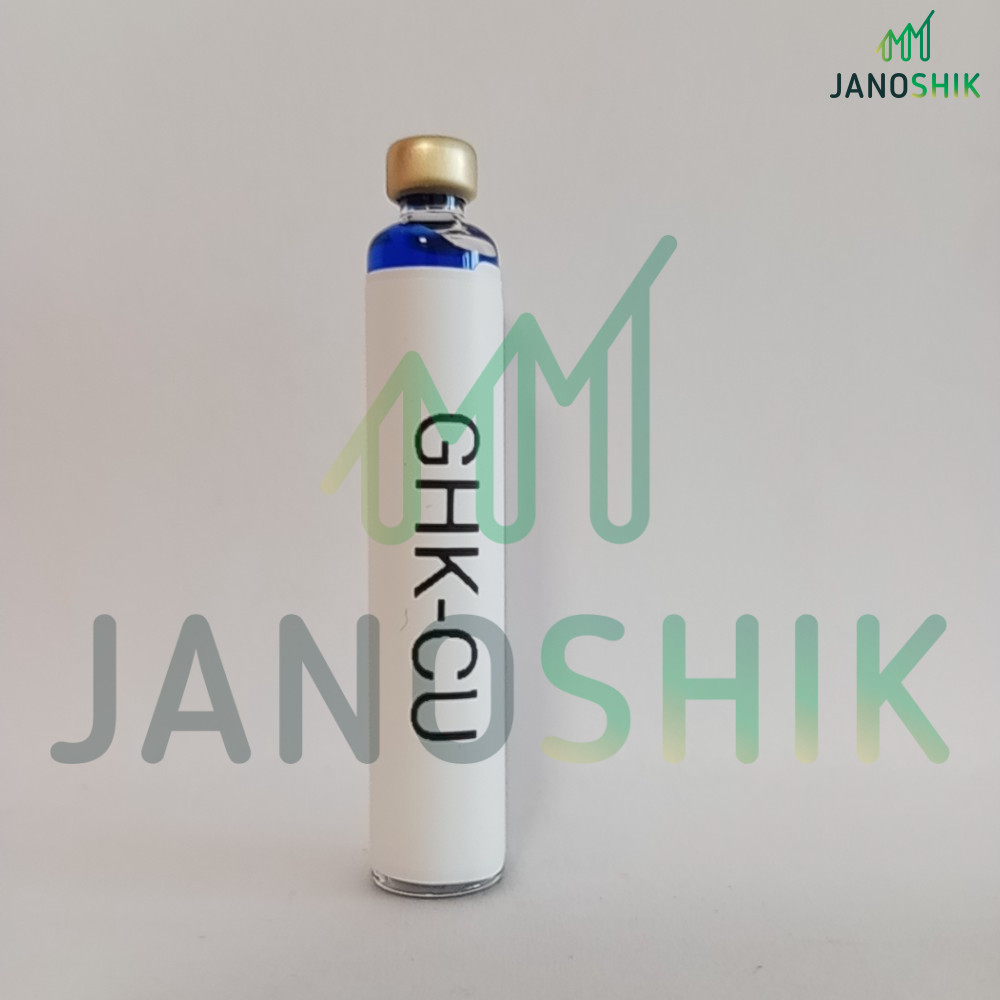
This is the Janoshik verification image linked from Mercia Research for its GHK-Cu 100 mg cartridge. The point is not that one certificate makes a vendor perfect. The point is to learn what a real analytical document can and cannot establish.
1. Sample identity
The report should identify what sample was submitted. Check that the compound and presentation make sense for the product being sold.
2. Batch / lot connection
A certificate becomes far more useful when the lot or batch can be matched to the product supplied. A generic old report is weak evidence for a new batch.
3. Analytical method
Ask what was actually measured. HPLC can support a purity claim; mass spectrometry can support identity; quantity/content and microbiological checks require their own methods.
4. Measured result
Read the actual result rather than a vendor's green PASS badge. The number and method matter more than the design of the certificate.
5. Laboratory provenance
The laboratory should be identifiable and, ideally, the result should be verifiable directly with the laboratory rather than only through a vendor-hosted PDF.
6. What is missing?
A purity certificate alone does not establish sterility, endotoxin, heavy metals, residual solvents, quantity, manufacturing quality or shipping conditions unless those are separately tested and documented.
Think in layers
1. Identity
Is it what the label says?
2. Purity
How clean is the target compound?
3. Quantity
How much is actually there?
4. Microbiology
For material represented as sterile or injectable, what is known about sterility and bacterial endotoxins?
Batch traceability
A valid report for somebody else's batch is not evidence for yours.
Batch number
The product and analytical record should share a batch or lot identifier.
Sample path
Know whether the lab received a vendor-selected sample, customer-supplied sample or independently sourced sample.
Testing history
A consistent pattern across multiple batches is more informative than one perfect-looking certificate reused indefinitely.
Origin & traceability
China and other opaque source markets deserve extra verification.
Manufacturing standards, inspection access and regulatory oversight are not equally transparent in every market. China is an important example: FDA and the U.S. Government Accountability Office have documented persistent challenges in foreign-drug oversight, including inspection backlogs and the historical use of advance notice for many foreign inspections.
FDA has also issued recent warning letters to specific Chinese drug and testing facilities for serious CGMP, laboratory-record and data-integrity problems. These are documented examples, not proof that every Chinese manufacturer is poor quality. A transparent Chinese manufacturer with strong batch evidence can be more credible than an opaque UK or US reseller.
What should materially increase concern is concealed or misrepresented origin. If a seller presents Chinese-manufactured material as UK- or US-manufactured, that is a directly verifiable transparency failure. It does not prove every other claim is false, but it reasonably lowers confidence in harder-to-check claims such as identity, purity, quantity, sterility, laboratory provenance and batch history.
Documented FDA warning examples from China
These examples show why source-country transparency and independent verification matter. They do not mean every Chinese manufacturer has the same problems.
2024 · Sichuan Deebio Pharmaceutical
FDA cited significant CGMP deviations and data-integrity concerns, including microbiology test results that were not documented contemporaneously.
2025 · China Pharmaceutical University testing center
FDA cited incomplete laboratory records for API testing, including missing sample-preparation, test-procedure and system-suitability documentation.
2025 · Chengdu Brilliant Biopharmaceutical
FDA cited significant API CGMP deviations and stated that the facility had not demonstrated process validation for semaglutide API manufactured at the site.
Concealed origin is a separate red flag
A false manufacturing story changes how you should interpret every other claim.
There is an important difference between openly stating that a peptide was made in China and presenting imported Chinese material as though it were manufactured in the UK or US. The first is an origin fact that can be evaluated. The second is a verifiable misrepresentation.
If a supplier is willing to fabricate or conceal a fact as basic as manufacturing origin, confidence should fall in claims that are harder for a buyer to verify, including purity, quantity, sterility, test provenance and batch history. That is a trust inference, not proof that every other claim is false.
Vendor comparison scenario
Vendor A
- • “99% purity” badge with no independently verifiable report
- • no visible batch match
- • no quantity result
- • vague or contradictory manufacturing-origin claims
- • domestic shipping address presented as if it proved domestic manufacture
Vendor B
- • identity + purity result
- • measured quantity where relevant
- • matching batch / lot
- • named, independently verifiable laboratory
- • disclosed manufacturing site and handling chain
- • origin claim consistent with the evidence
Vendor B gives you more evidence to interrogate. The goal is not a patriotic country ranking; it is a traceable chain of claims that survives verification.
The sourcing rule
Country is context. Traceability is evidence. Dishonesty about origin is evidence too.
A strong vendor should make it possible to connect the product, batch, analytical result, laboratory, manufacturing origin and handling chain without asking you to fill the gaps with trust.
Key takeaways
- ✓Identity, purity, quantity and microbiological quality are separate questions.
- ✓A COA is most useful when it clearly matches the batch being sold and can be verified with the laboratory.
- ✓Country of origin is a legitimate risk signal, but not a substitute for analytical evidence.
- ✓Opaque or misrepresented origin should materially lower confidence in a vendor's harder-to-verify claims.
- ✓A local warehouse or company registration does not prove where peptide synthesis occurred.
- ✓Good sourcing is an evidence chain, not one impressive number.
Further reading
Certificates of Analysis
Mercia Research
GHK-Cu 100 mg cartridge — Janoshik verification
Janoshik Analytical
Q7 Good Manufacturing Practice Guidance for Active Pharmaceutical Ingredients
U.S. FDA / ICH
Drug Safety: Persistent Challenges Overseeing Foreign Drug Manufacturing
U.S. Government Accountability Office
FDA expands unannounced inspections at foreign manufacturing facilities
U.S. FDA
FDA warning: Sichuan Deebio Pharmaceutical
U.S. FDA
FDA warning: China Pharmaceutical University testing center
U.S. FDA
FDA warning: Chengdu Brilliant Biopharmaceutical
U.S. FDA
Lesson finished
Ready for the checkpoint?
The quiz opens on its own page. Get every answer correct to mark this lesson complete and continue.
Take lesson quiz →Previous
Tracking results & what to expect ←
Next lesson
How to research a peptide →
Continue when you are ready, or come back to this lesson whenever you need a refresher.